In memoriam: Carina Perelli
March
29, 1957 – September 9, 2026
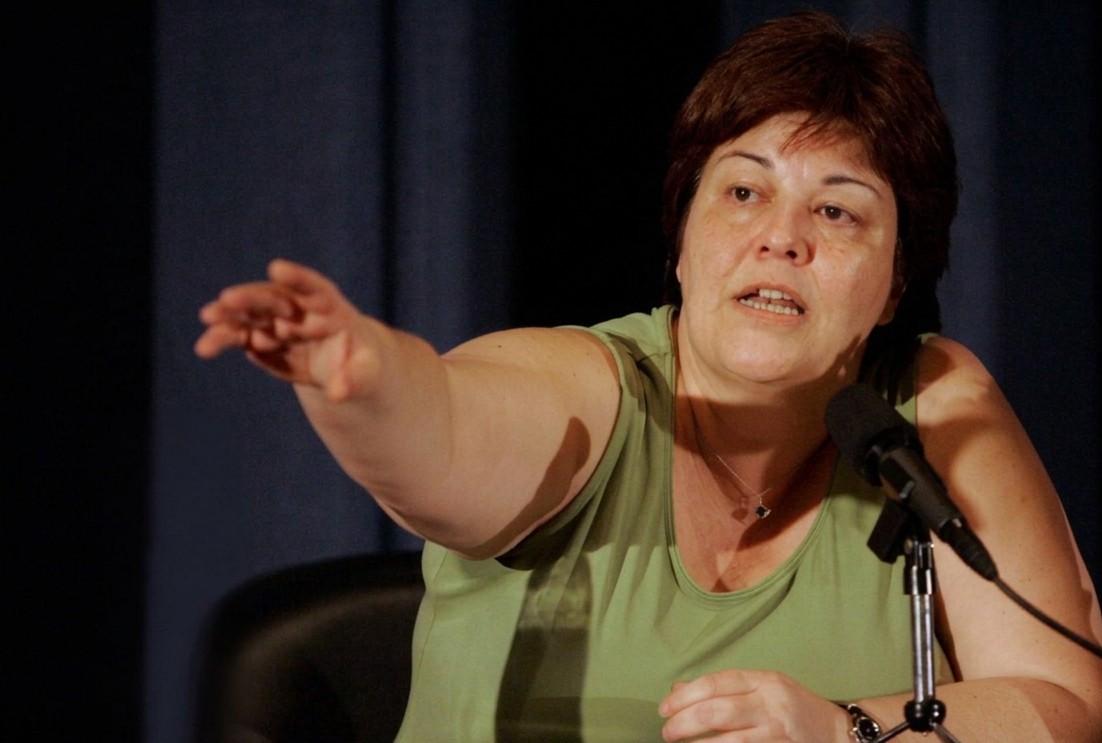
The Latin American
Security and Defense Network (RESDAL) mourns the loss of Carina Perelli, a member
of the organization and an internationally recognized expert in electoral
assistance, security and defense. Carina passed away on September 9, 2026, at
the age of 69, leaving behind an exceptional career devoted to building
democracy.
Born
and raised in Montevideo, she was educated at the Lycée Français and earned a
degree in Social Work from the Universidad de la República. During Uruguay's
civic-military dictatorship, she studied Sociology at CLAEH, and later pursued
graduate studies at FLACSO and a master's degree at the University of Notre
Dame. She taught Political Science at the Universidad de la República and the
Universidad Católica del Uruguay, and conducted research at universities in
Paris and Washington, D.C., including Georgetown University. From 1998 to 2005,
she headed the United Nations Electoral Assistance Division.
In that role, she took
part in some of the most complex political processes of her time. In East
Timor, she led the UN electoral component of the referendum that paved the way
to independence. After the pro-Indonesian side was defeated, as violence
escalated and international staff were ordered to evacuate, Carina chose to
remain in the UN compound to protect the Timorese civilians who had taken
refuge there. She later worked alongside Sergio Vieira de Mello on the process
that established the country's first government.
"She took on
indispensable leadership in a situation as turbulent as it was violent,"
recalled a UN colleague from those years.
In Iraq, she served as
Acting International Commissioner for the October 2005 constitutional
referendum. She negotiated with the Multinational Force and Iraqi ministries
the conditions needed to guarantee the vote of detainees, and was the first UN
official authorized to enter Abu Ghraib prison to ensure adequate voting
conditions.
She
was also involved in the political negotiations to reform Lebanon's electoral
system. A colleague recalls an episode from that period that captures her
character. During a meeting with a senior Hezbollah leader, a guard asked her
to cover her head with a scarf. Carina agreed, greeted her counterpart in
Arabic and, as she took her leave, told him: "Sir, with the body I have,
there is no risk I could seduce you. Out of courtesy I accepted your scarf; now
I return it to you and bid you farewell."
Her UN career was also
marked by an institutional dispute. In December 2005, she was summarily
dismissed on allegations of misconduct. In 2006, a UN disciplinary panel
concluded that her dismissal had been carried out without due process and that
the allegations had not been proven. In March 2013, after more than seven years
of litigation, the UN administrative justice system confirmed that her
dismissal had been unlawful and factually unsustainable.
Associated
with the International Foundation for Electoral Systems (IFES) since 1993, she
served as its Executive Vice President from 2009 to 2012. During that time she
led electoral assistance projects in Afghanistan, where she took part in the
negotiations surrounding the runoff of the 2009 presidential election. She
subsequently continued her work as an independent consultant.
As a
member of RESDAL, Carina maintained a close collaboration with the organization
over the years. She co-authored studies on the crisis in Mali and the Sahel
(2013) and on Lebanon (2014), as well as several reference books on the armed
forces, democratic transition and electoral processes in Latin America.
Her
contribution went far beyond the positions she held and the projects she led.
She left a deep mark on those who shared with her the work and challenges of
international cooperation. "If I had to count on the fingers of one hand
the people who changed the course of my professional and personal life, Carina
would be among them," one of her colleagues wrote a few days after her
passing.
But
behind the negotiator, the scholar and the international expert was also a
person of enormous vitality, humor and character. Her daughter Elisa remembered
her in words that offer a glimpse of that other side of her life: "The woman who
drank coffee like it was the ambrosia from Olympus itself, the woman who smoked
like a chimney, the woman who watched police procedurals and had opinions, the
woman who loved reading and could gush about her new favorite authors."
She
added: "She was a beautifully bright, utterly infuriating woman who could
out-stubborn a mountain if necessary […] The Carina Perelli I had the privilege
to know was both the invincible Wonder Woman who could take on the world, and
she was the ornery, lovely, proud bookworm who could love as fiercely as the
lioness. I was lucky to call her mom."
Her
brother Jorge bid her farewell with words as simple as they are moving:
"She was my sister. I was her brother." And, in closing:
"Corazón, I miss you. I loved you in our own imperfect, complicated, very
real way. You were my sister, you will always be my sister, and I will carry
you with me for the rest of my life. Rest in peace, Corazón."
RESDAL
extends its heartfelt condolences to her daughter Elisa, her brother Jorge and
her entire family, and thanks all those who shared their memories for this
tribute. We remember Carina
Perelli for her intelligence, her independent judgment, her courage and her
commitment to democracy. Her life reminds us that building democratic
institutions requires knowledge, conviction and the ability to act even in the
most adverse circumstances.
As a member
of RESDAL, her legacy is part of our organization's history and lives on in the
work of all of us who remain committed to democracy, security and defense in
Latin America.